How to plan a load lifting and positioning job

532 Cranes Pty Ltd • July 26, 2026

Load lifting and positioning can involve much more than moving machinery. Building materials, tanks, fabricated components, site equipment and other awkward items may all require crane support when they cannot be handled safely or efficiently by other means. The best starting point is to provide accurate information about the load, the pickup point and the intended placement location.

532 Cranes provides load lifting and positioning across Adelaide using a KATO 13-tonne and Tadano 10-tonne slewing crane. The following checklist explains what information helps the team assess whether the fleet is suitable for the job.

Confirm the load weight and dimensions

The crane provider needs the confirmed weight of the item, along with its length, width and height. Supplier documents, manufacturer specifications and fabrication drawings are more reliable than visual estimates.

The load shape can be just as important as the weight. Long, uneven or top-heavy items may require different lifting arrangements from compact loads of the same weight.

Provide information about available lifting points, frames, lugs or approved attachment locations. If the item does not have suitable lifting points, this should be identified before the scheduled date.

Explain where the load starts and finishes

Describe the pickup location and the final placement point. Include the approximate distance between these positions and whether the crane must lift over buildings, fences, scaffolding or stored materials.

A load being removed from a truck beside the crane is different from one that needs to be placed deep within a site. Working radius affects crane capacity, so the placement position must be considered before the correct unit can be selected.

If the load is being positioned onto supports, foundations or prepared fixings, confirm that the destination area will be ready before the crane arrives.

Provide access and setup information

Send clear photos of the entrance, travel route, unloading area and proposed crane position. Show gates, driveway widths, overhead obstructions, nearby buildings and temporary site conditions.

The setup area needs to be level, stable and clear. Mention recent excavation, filled ground, underground services, drainage infrastructure or any other condition that could affect the crane position.

Traffic, pedestrians and other trades may also need to be coordinated. The site controller should consider how the lifting zone will be kept clear while the load is being moved.

Prepare the load and receiving area

The load should be accessible and ready to lift at the agreed time. Remove loose items, packaging or obstructions that could delay attachment of the lifting gear.

The receiving area should also be prepared. Supports, fixings, installers and required tools need to be ready before the item reaches its final position.

Clear communication between the crane operator and site team helps maintain control during positioning. Confirm who will direct the operation and who will secure the load once it is in place.

Information to send when requesting a quote

  • Site address and preferred date
  • Confirmed load weight and dimensions
  • Photos or drawings of the item
  • Pickup and placement locations
  • Approximate lifting height and reach
  • Access and setup photos
  • Known overhead or ground hazards
  • On-site contact details

For general equipment information, review our crane hire service. Projects involving beams, columns or fabricated frames may be better suited to our structural steel lifting service.

Discuss your load before confirming the lift

Accurate load and site information helps determine whether the available crane is suitable and allows potential restrictions to be identified early. It also gives the site team time to prepare the receiving area and installation crew.

Explore our load lifting and positioning service, or contact our team with the load details and site photos to discuss your project.

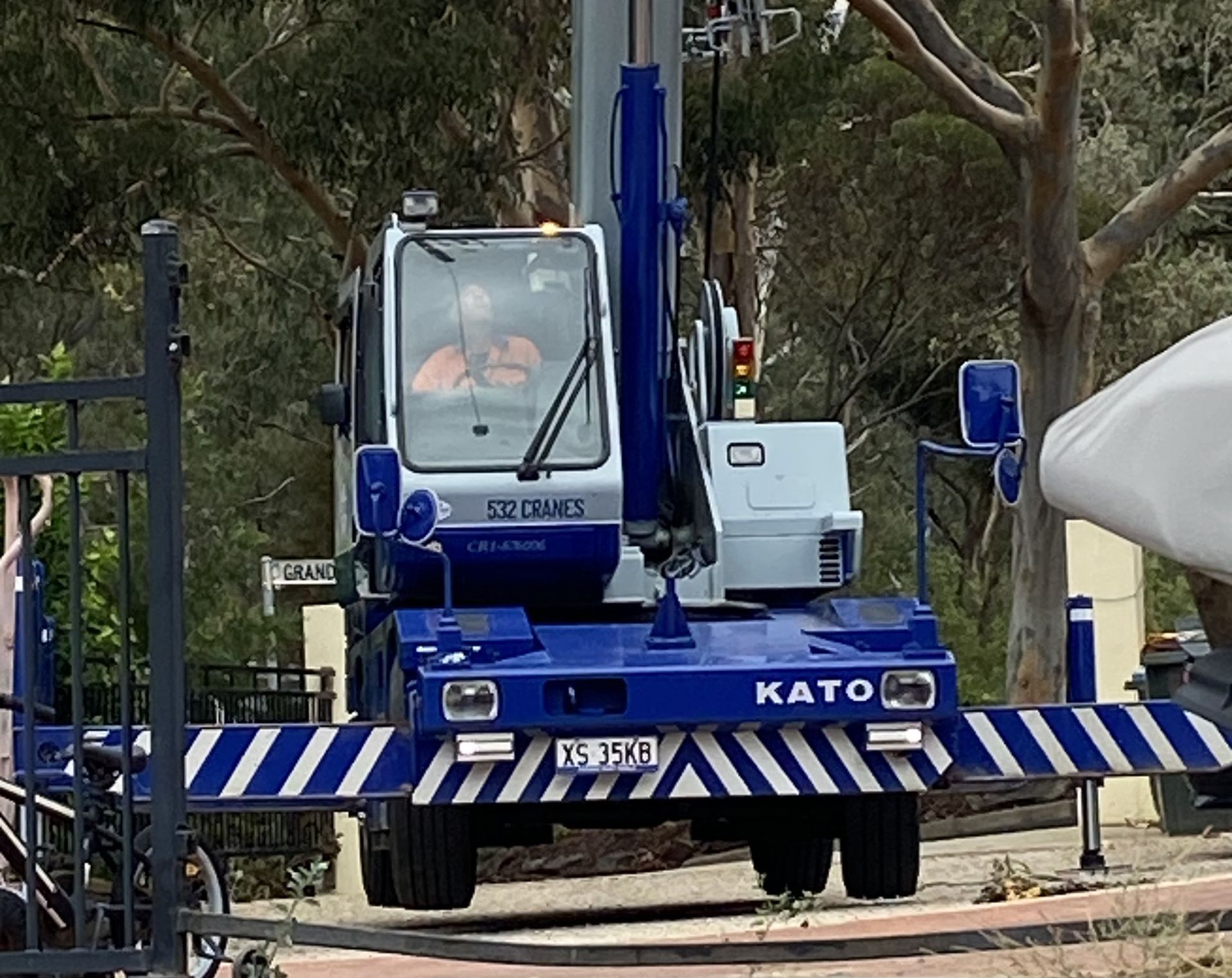
Crane attending a time-sensitive lifting job in Adelaide
By 532 Cranes Pty Ltd July 26, 2026
Need urgent crane hire in Adelaide? Learn which load, access and timing details help assess availability quickly. Prepare the right information before calling.
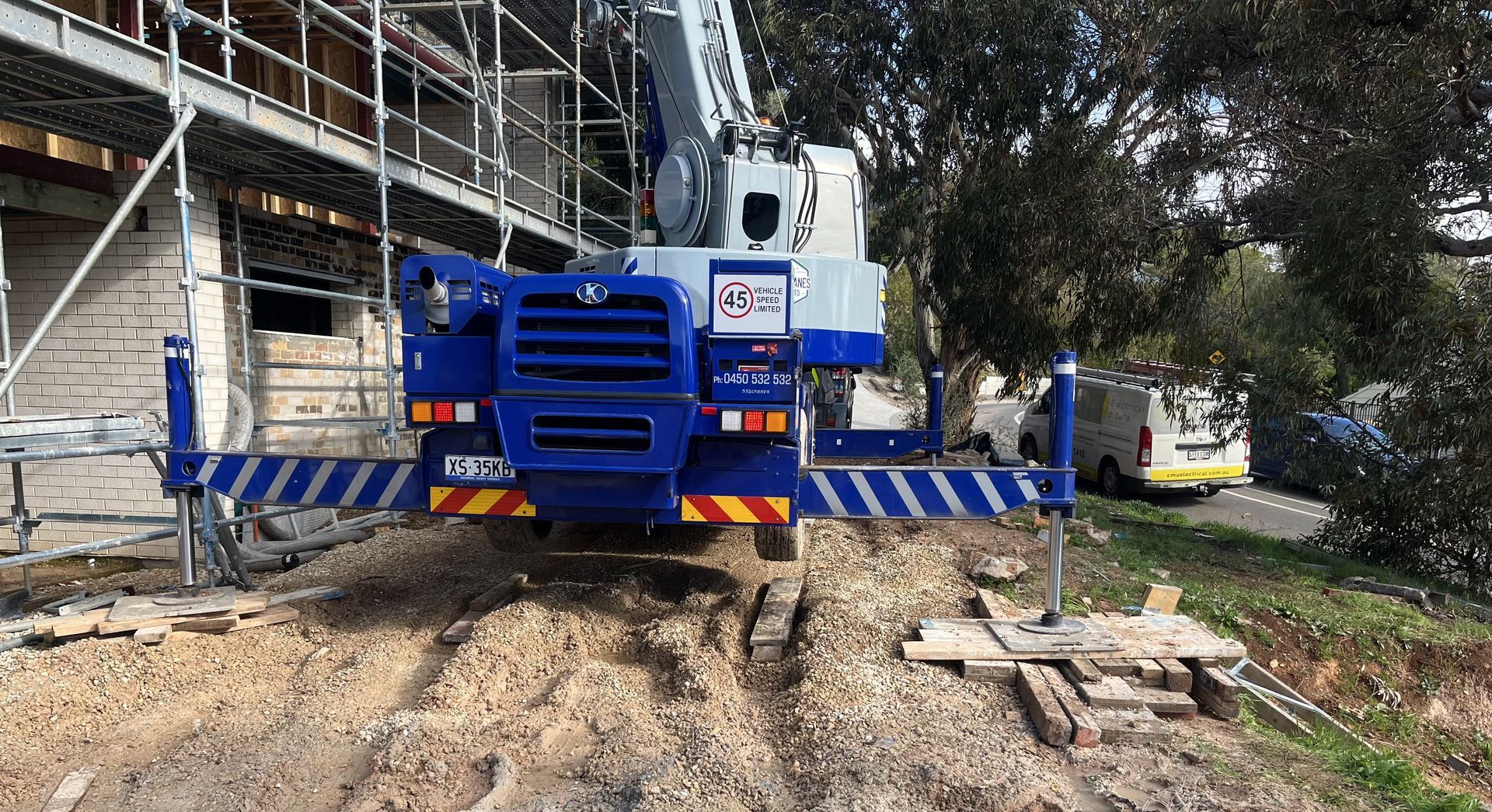
Compact slewing cranes being assessed for an Adelaide lift
By 532 Cranes Pty Ltd July 26, 2026
Learn how load weight, reach, height, access and setup conditions affect crane selection in Adelaide. Review the key details before requesting a quote.
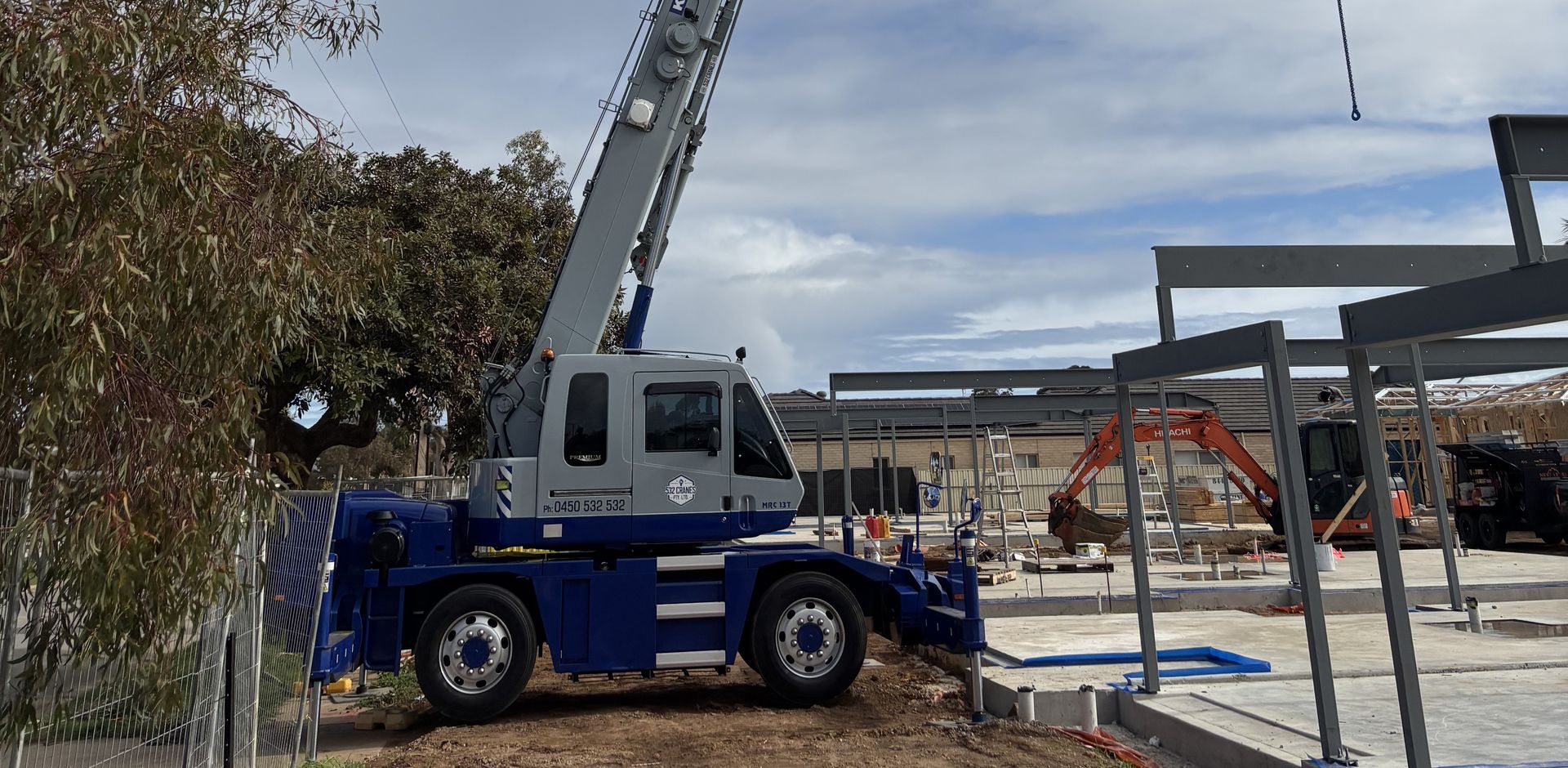
Structural steel prepared for crane lifting on an Adelaide construction site
By 532 Cranes Pty Ltd July 24, 2026
Learn what to prepare before structural steel lifting in Adelaide, including weights, access and installation order. Review the checklist and plan your lift.
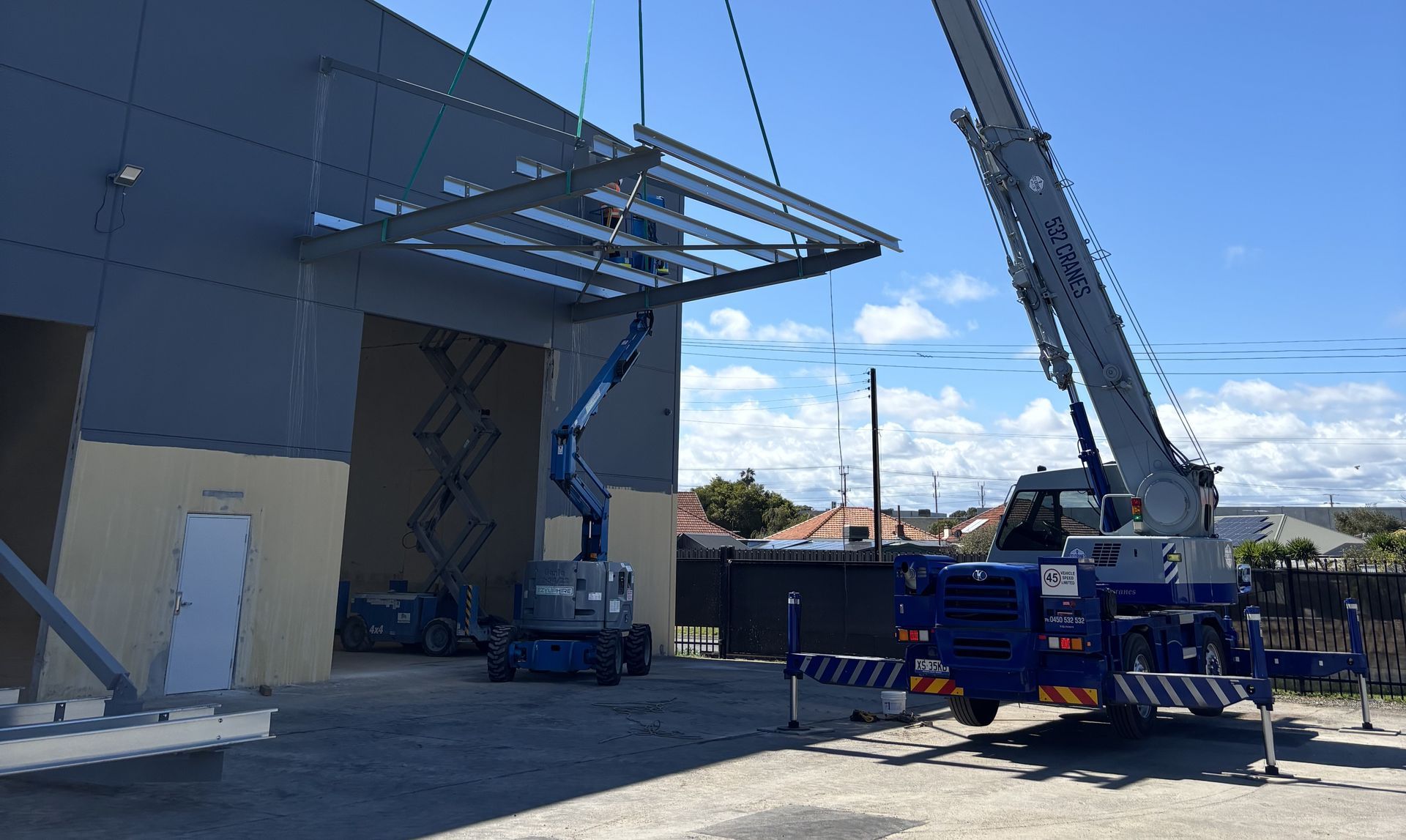
Construction site prepared for a crane lift
By 532 Cranes Pty Ltd July 24, 2026
Learn how to prepare access, ground conditions, load details and site communication before a crane lift in Adelaide. Practical guidance from 532 Cranes.
Crane attending a time-sensitive lifting job in Adelaide
By 532 Cranes Pty Ltd July 26, 2026
Need urgent crane hire in Adelaide? Learn which load, access and timing details help assess availability quickly. Prepare the right information before calling.
Compact slewing cranes being assessed for an Adelaide lift
By 532 Cranes Pty Ltd July 26, 2026
Learn how load weight, reach, height, access and setup conditions affect crane selection in Adelaide. Review the key details before requesting a quote.
Structural steel prepared for crane lifting on an Adelaide construction site
By 532 Cranes Pty Ltd July 24, 2026
Learn what to prepare before structural steel lifting in Adelaide, including weights, access and installation order. Review the checklist and plan your lift.
Construction site prepared for a crane lift
By 532 Cranes Pty Ltd July 24, 2026
Learn how to prepare access, ground conditions, load details and site communication before a crane lift in Adelaide. Practical guidance from 532 Cranes.