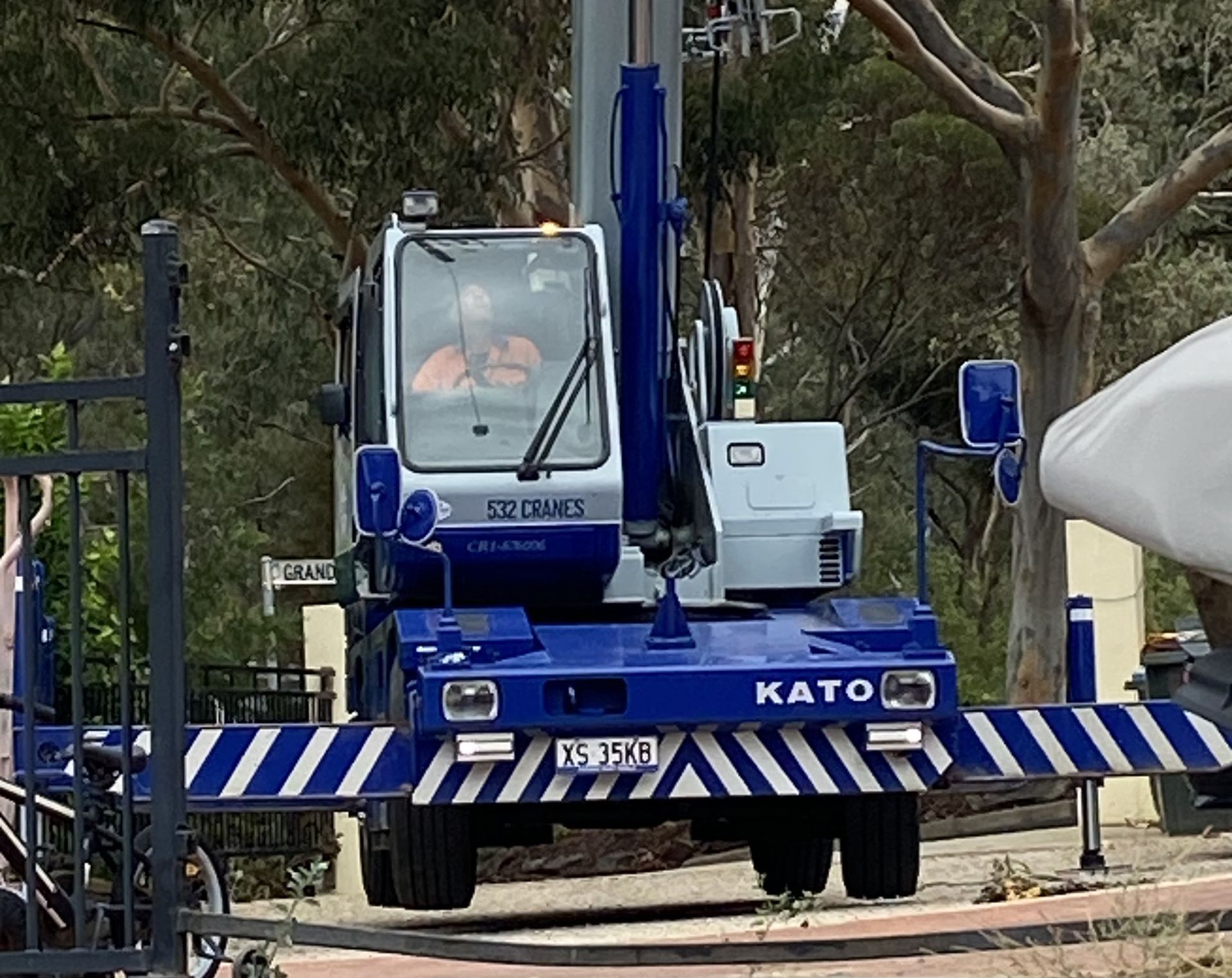
How to prepare your site for a safe crane lift
A successful crane lift begins well before the crane arrives on site. Clear access, accurate load information and a suitable setup area all help the crane operator assess the job and complete the lift efficiently. Providing the right details early can also prevent delays caused by unsuitable access, unknown load weights or unexpected site restrictions.
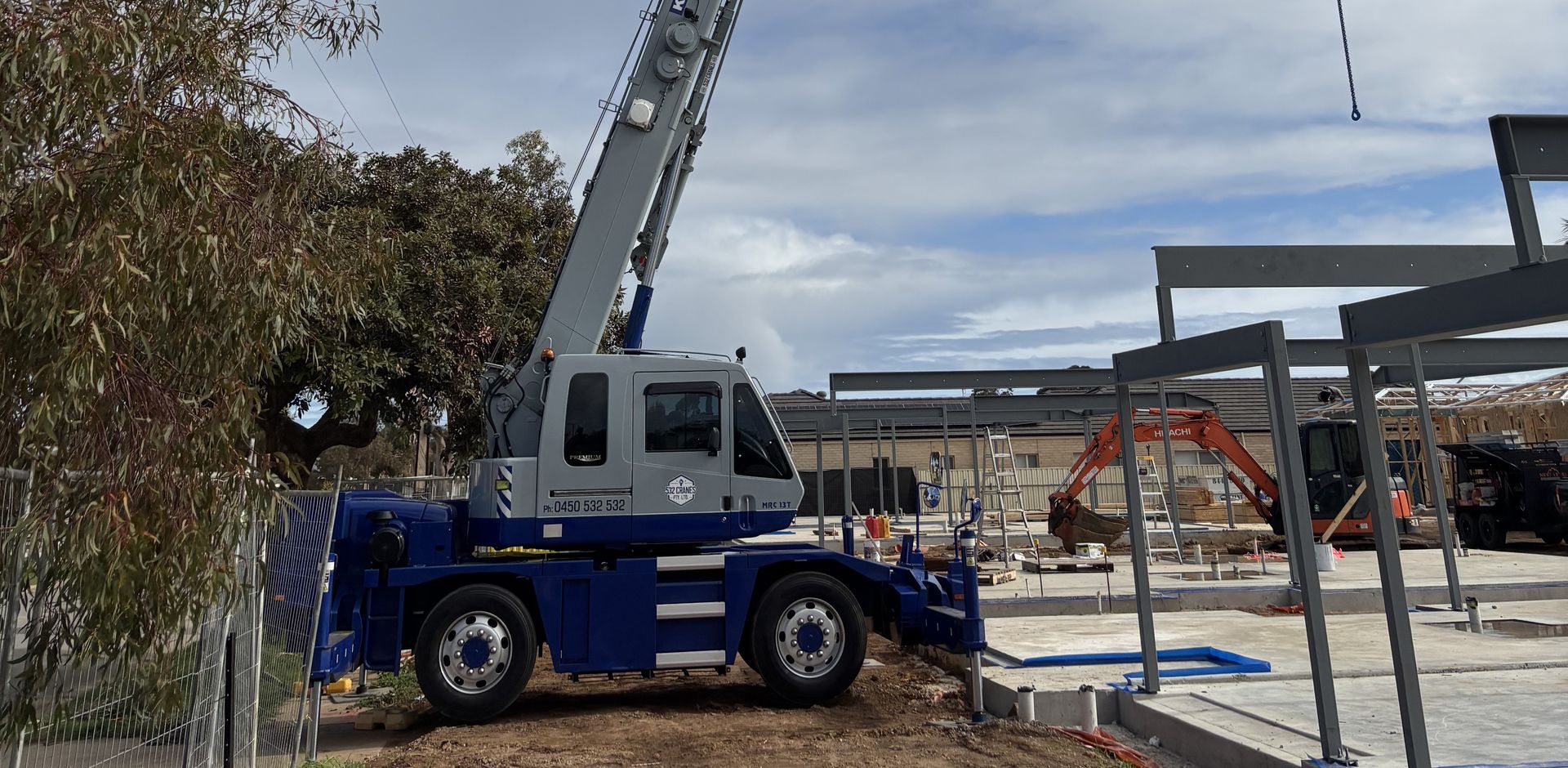
532 Cranes operates a KATO 13-tonne slewing crane and a Tadano 10-tonne slewing crane for small-to-medium lifting work across Adelaide. Each project is assessed against the capabilities of this fleet, including the load weight, working radius, lift height and available setup space.
Confirm the load weight and dimensions
The stated lifting capacity of a crane does not mean it can lift that weight in every position. Capacity changes according to the required reach, boom configuration and distance between the crane and the load. This is why accurate load information is essential when requesting crane hire in Adelaide.
Provide the confirmed weight of the item wherever possible, along with its length, width and height. Manufacturer specifications, fabrication drawings and supplier documentation are more useful than visual estimates. For structural steel, identify the weight of each beam, column, frame or fabricated component rather than only providing the total project weight.
The team should also know where the load will be collected and where it must be placed. A lift from a truck directly beside the crane is different from moving the same load across a worksite or placing it behind a building.
Provide clear site and access information
Before the crane can be confirmed, the operator needs to understand how the unit will enter, move through and leave the site. Narrow driveways, parked vehicles, gates, overhead structures and tight turning areas can affect access.
Send current photos or a short video showing the entrance, approach, setup area and lifting location. Include any known restrictions such as low branches, powerlines, scaffolding, excavations, traffic conditions or limited street access.
For suburban projects, consider how delivery vehicles, trades and local traffic will interact with the crane. Keeping the access route clear before arrival reduces unnecessary waiting and helps the operator position the equipment correctly.
Prepare a suitable crane setup area
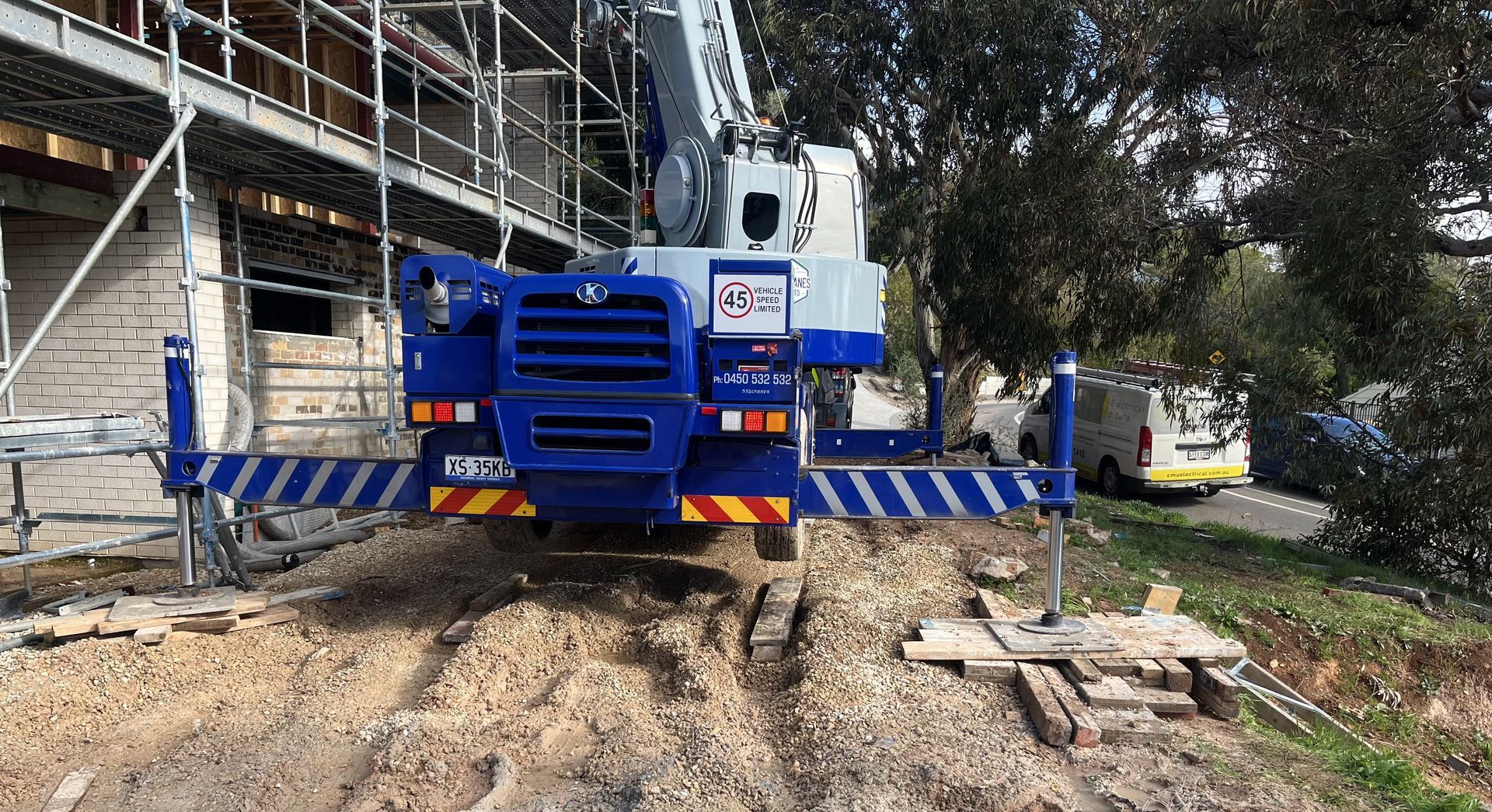
The crane needs sufficient space to set up and operate within its rated configuration. The required area depends on the selected crane, the lift radius and the surrounding site conditions.
The setup location should be level, stable and clear of stored materials, waste, vehicles and other obstructions. Let the crane provider know about soft ground, recent excavation, filled areas, underground services, pits, drainage infrastructure or other conditions that may affect stability.
Do not assume that a compact crane can be placed anywhere simply because it can access the site. The final position must allow the crane to operate safely while maintaining the required reach to the pickup and placement points.
Check overhead and surrounding hazards
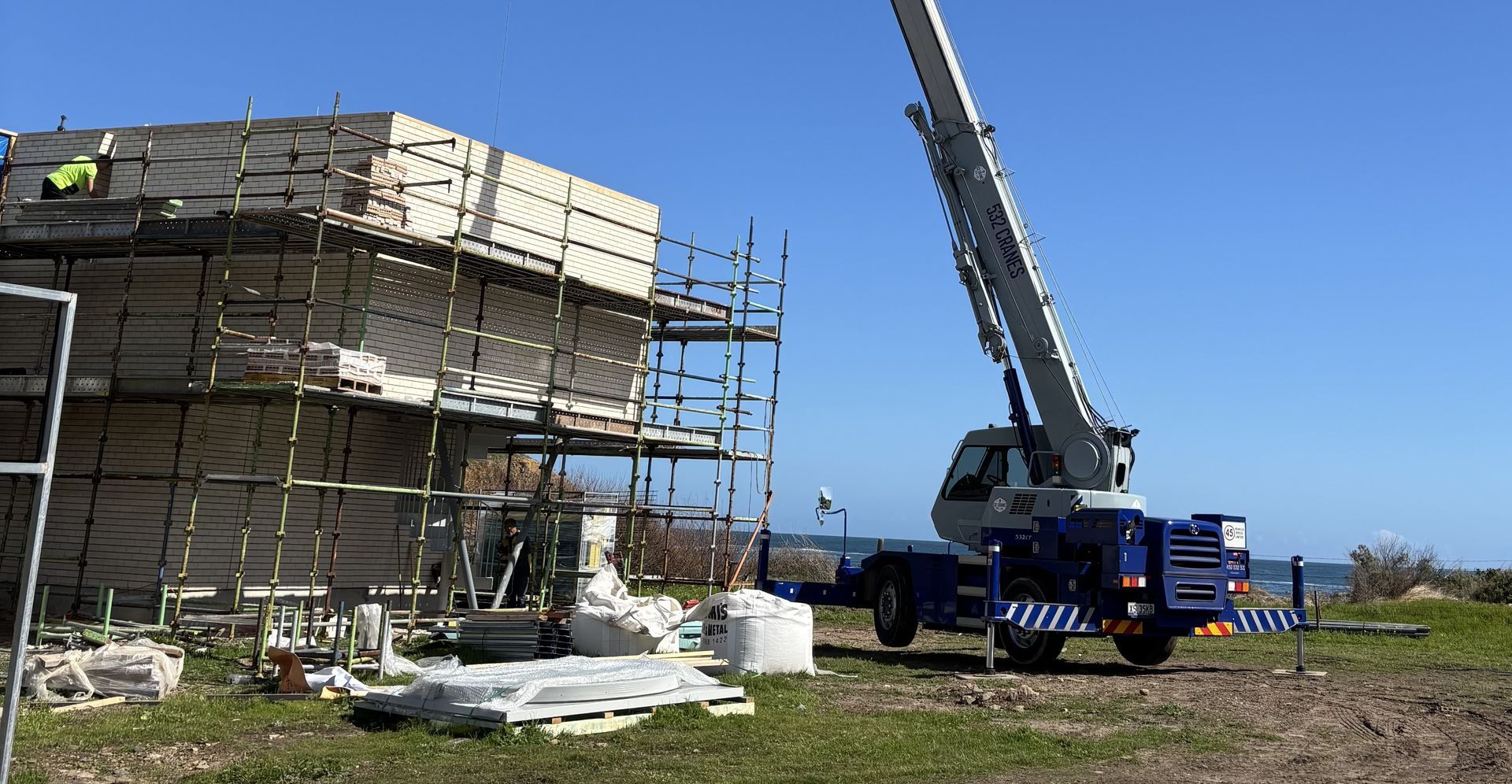
Powerlines are one of the most important hazards to identify before crane work begins. The operator also needs to know about trees, building edges, roof structures, communication lines and other overhead obstructions.
Consider what is happening around the lifting zone. Workers, vehicles and members of the public should not be moving beneath or through the lift path. The principal contractor or site controller may need to establish an exclusion area and coordinate other trades during the operation.
If the lift is taking place near a road, footpath or shared access area, additional site controls may be required. These arrangements should be identified before the scheduled date rather than once the crane is already on site.
Prepare the lifting and placement points
The load should be ready to lift when the crane arrives. Confirm that lifting points are accessible and appropriate for the item being handled. For steelwork, make sure components are clearly identified and arranged in the intended installation sequence where possible.
The destination should also be prepared. Check that supports, fixings, installers and required tools will be ready when the component is positioned. Delays often occur when the load reaches its placement point but the receiving team is not prepared to secure or install it.
532 Cranes uses inspected lifting equipment suited to the planned task. The required chains, slings and lifting arrangement still depend on accurate information about the load and its lifting points.
Establish clear site communication
Precise lifts require clear instructions between the crane operator and the team guiding the load. Confirm who will act as the primary site contact and who is responsible for directing the lift.
532 Cranes operates on private front radio channels to help reduce outside signal interference during lifting work. This supports clearer communication, particularly during structural steel lifting and other tasks requiring controlled positioning.
All workers involved should understand the agreed signals, lift sequence and exclusion area before the load is moved. Last-minute changes should be communicated to the operator so their impact can be assessed.
Send the required details before booking
When requesting a quote or checking crane availability, provide:
- The site address
- The load weight and dimensions
- Pickup and placement locations
- Required lifting height and approximate reach
- Photos or video of access and the setup area
- Known overhead or ground hazards
- The preferred date and project schedule
- On-site contact details
This information helps determine whether the KATO 13-tonne or Tadano 10-tonne slewing crane is appropriate for the lift. It also allows potential site limitations to be identified before equipment is dispatched.
Plan your Adelaide crane lift with 532 Cranes
Proper preparation supports a safer and more efficient lifting process. Accurate load details, clear access and a prepared setup zone allow the crane operator to assess the project and arrive with a practical plan.
Explore our crane hire services to learn more about the fleet and lifting capabilities available across Adelaide. To discuss a project, contact 532 Cranes with your load specifications, site photos and preferred timing.